
Machine polishing that removes swirl marks, oxidation and wash marring, so the reflection reads sharp again instead of hazy.
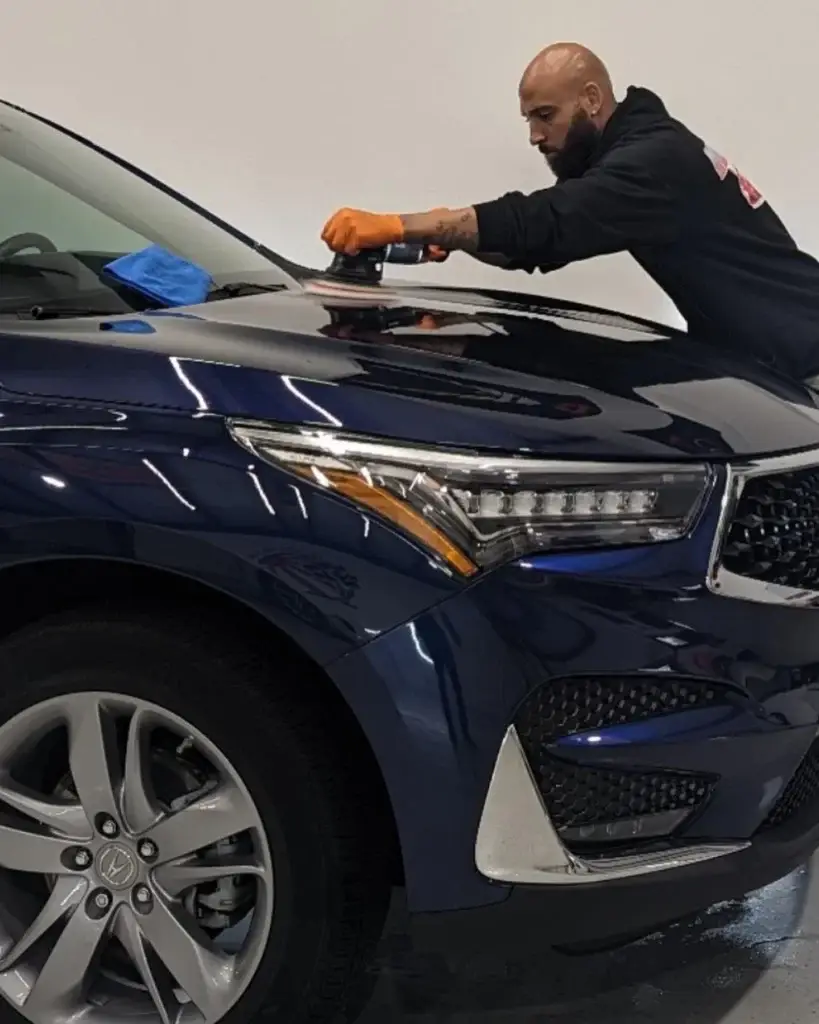
How much correction your paint needs is a measurement, not a guess. We read the panel under inspection light and quote the stage that gets the result you are paying for.
Correction is priced by hours on the machine, which depends on paint hardness, vehicle size and how deep the defects run. We quote after reading the paint, never before.
Correction removes defects rather than filling them, which is why the result survives the next wash instead of washing away with it.
The spiderweb pattern you see under sunlight or a gas station canopy. Caused almost entirely by poor washing technique, and fully correctable.
Chalky, faded paint from years of UV exposure. Common on red, black and single stage paint on older vehicles in the Upstate.
Mineral deposits that have burned a ring into the clear coat. Light etching polishes out, deep etching may need wet sanding.
If a scratch does not catch your fingernail, correction usually removes it. Deeper scratches through the clear coat need paint, not polish.
Left behind by rotary polishers used badly, often by a dealer prep department. We finish with a dual action machine and no trails.
Correction is what makes a coating worth buying. Sealing a flat, defect free surface is the difference between shiny and genuinely deep.
Inspection light and a paint depth gauge tell us what we are working with and how much clear coat there is to work in.
Polishing over bonded iron and road grit drags contamination across the panel and creates new scratches.
One small area, one pad and compound combination, checked under light. This is what sets the pricing honestly.
Panel by panel, with controlled speed and pressure, cleaning or swapping pads as they load up.
Bare corrected paint is vulnerable. It leaves with a sealant at minimum, or a ceramic coating if you have chosen one.
Paint correction is the machine polishing of a vehicle clear coat to permanently remove swirl marks, oxidation, water spot etching and light scratches. Abrasive compounds level a fraction of the clear coat until the surface is flat again, which restores gloss and sharp reflection rather than hiding the damage.
Paint correction starts at $400 and is priced by the hours the machine work takes. A one stage correction on a well kept sedan sits near the bottom of that range. A two stage correction on a large, heavily swirled truck with hard paint sits well above it. You get the number after we read the paint.
One stage is a single pass with a combined cut and finish polish, which removes most light swirling and typically recovers 60 to 80 percent of the gloss. Two stage adds a dedicated compounding pass before the refining polish, removing deeper defects and recovering more, at roughly double the machine time.
No. A useful test is your fingernail. If it does not catch in the scratch, correction will almost certainly remove it. If it does catch, the damage has gone through the clear coat and needs touch up or paint. We will tell you which category yours falls into before quoting.
Yes, when it is measured. Correction removes a few microns of clear coat, and a factory finish has enough to be corrected several times over its life. We use a paint depth gauge before any aggressive work, and we will stop and tell you if a panel has been resprayed thin.
The correction itself is permanent, because the defects are removed rather than filled. What determines how long it looks that way is how the car is washed afterward. Poor washing puts swirls straight back in, which is why most correction customers add a coating and a maintenance plan.
In almost every case, yes. A coating is optically clear and locks the paint in whatever state it is in for two years or more. Coating over swirl marks preserves the swirl marks. Correction is included in our ceramic packages for exactly this reason.
Complete interior and exterior service. The full reset, inside and out, in one visit.
Deep vacuum, steam, shampoo and conditioning. Every seam, vent and crevice.
Hand wash, decontamination, wheels, tires, trim and a protective finish.
System X paint protection with a deep gloss and a hydrophobic, self cleaning finish.
Safe degrease and dress of the engine bay so it looks as cared for as the paint.
Cut back yellowed, hazy lenses and seal them for clearer light and a sharper front end.
Hangar and ramp detailing for private aircraft, using aviation safe products.
Send a photo in daylight and we will tell you what stage of correction it needs and roughly what it costs.