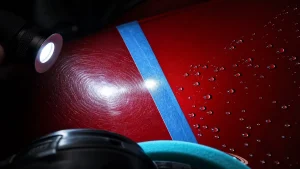
Quick answer: In the paint correction vs ceramic coating decision, paint correction is machine polishing that permanently removes swirl marks, light scratches, and oxidation by leveling a microscopic amount of clear coat. Ceramic coating is a protective layer applied on top of the paint. Correction fixes what is already wrong. Coating prevents what comes next. If your paint has visible swirls, you need correction first, because a coating locks in every defect underneath it for years.
Paint correction vs ceramic coating is one of the most confused comparisons in detailing. These two services get sold together so often that most people assume they are the same thing. They are not even in the same category. One is repair. The other is protection.
Getting the order wrong is an expensive mistake, because a ceramic coating is transparent and permanent-ish. Whatever your paint looks like the moment the coating goes on is what it will look like for the next three to five years.
What paint correction actually does
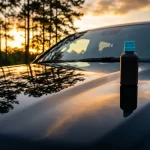
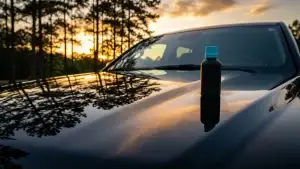
Walk out to your car in direct sunlight and look at the hood at a low angle. If you see a faint spiderweb of fine circular scratches, you are looking at swirl marks. Almost every car on the road has them, and almost nobody notices until someone points them out. Then you cannot stop seeing them.
Swirls come from contact: automatic tunnel washes with spinning brushes, drying with a rough towel, wiping dust off a dry car, circular washing motion. Each one is a shallow scratch in the clear coat. Individually invisible. Collectively they scatter light, which is why a swirled car looks hazy and flat instead of deep and wet.
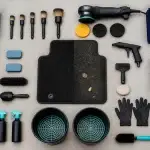
Paint correction removes them by leveling the clear coat down to the base of the scratch. A dual-action or rotary polisher, a series of pads, and abrasive compounds and polishes are used to shave down the surface in controlled stages until the defect is gone and the finish is optically flat again.
It is permanent. The scratch is not filled or hidden. It is removed.
Why it takes so long and why measurement matters
This is where the price comes from, and where the risk lives.
Automotive clear coat is thinner than most people imagine. According to paint thickness measurement guidance from DeFelsko, factory clear coat typically measures 1.5 to 2.0 mils, roughly 35 to 50 microns, and manufacturers recommend removing no more than about 0.3 mils, or 8 microns, to preserve the UV protection that keeps the color coat underneath from failing.
Eight microns. That is your entire budget for the life of the vehicle, across every correction it will ever receive.
This is why a professional measures paint thickness before and during correction instead of guessing. Burn through the clear coat and the only fix is a repaint of that panel. A detailer who cannot tell you how they monitor removal is a detailer working blind on a surface with almost no margin.
One-step versus two-step
- One-step correction. A single polishing stage using an all-in-one compound and pad. Removes light swirls and improves gloss significantly. Typically restores 60 to 80 percent of the possible clarity. Faster and cheaper.
- Two-step correction. A cutting stage to remove defects, then a refining stage to remove the haze the cutting stage leaves. Restores 85 to 95 percent. Substantially more hours.
- Three-step and beyond. For badly neglected or hard-paint vehicles, or show-level results. This is measured in days, not hours.
Nobody should promise 100 percent. Some scratches are deeper than the safe removal budget, and the right call is to leave them rather than compromise the clear coat. A good detailer will show you which ones those are before starting.
What ceramic coating actually does
A ceramic coating is a liquid polymer, usually silicon dioxide based, that bonds to the clear coat and cures into a hard, transparent, hydrophobic layer.
It provides UV resistance, chemical resistance against bug residue, bird droppings, and tree sap, easier washing because contaminants cannot grip the surface, and a gloss boost. Depending on grade it lasts one to seven years.
What it does not do: remove existing defects, prevent rock chips, or make a car immune to scratches. It is a sacrificial barrier with better properties than wax, not armor.
Paint correction vs ceramic coating: the direct comparison
| Paint correction | Ceramic coating | |
|---|---|---|
| Purpose | Removes existing defects | Prevents future damage |
| Method | Machine polishing, removes clear coat | Chemical bond, adds a layer |
| Fixes swirls | Yes, permanently | No, locks them in |
| Prevents swirls | No | Reduces them, does not eliminate |
| UV protection | No | Yes |
| Lasts | Until new swirls appear | 1 to 7 years |
| Repeatable | Limited by clear coat thickness | Yes, indefinitely |
| Starting price here | From $400 | From $1,500 |
Which one does your car need?
To settle paint correction vs ceramic coating for your own car, run this in order.
Step 1: Look at the paint in direct sun or under a bright LED at a low angle.
- You see a spiderweb of fine circles. You need paint correction. A coating now would preserve those swirls for years.
- You see deeper individual scratches. Correction helps if they are in the clear coat. Run a fingernail across one. If it catches, it is likely too deep to safely remove and will be improved, not eliminated.
- The paint looks chalky or faded, especially on the hood and roof. That is oxidation. Correction usually brings it back dramatically.
- The paint looks good and reflects cleanly. You do not need correction. Go straight to protection and save the money.
Step 2: Consider how long you are keeping the car.
- Keeping it three or more years: correction plus coating is the right investment.
- Selling within a year: correction alone transforms how it photographs and shows. Skip the coating.
- Leased and turning it in: neither. A good detail and a sealant is enough.
Step 3: Consider where it lives.
A car that parks outdoors under Upstate sun and pine pollen benefits enormously from a coating. A garage-kept weekend car mostly needs correction and a quality sealant.
Why order matters
In paint correction vs ceramic coating, correction always comes first. Always.
A coating bonds to the surface it is applied to. If that surface has swirls, the coating fills nothing and hides nothing. It seals the defects under a hard transparent layer that now has to be removed before anything can be corrected.
Removing a cured ceramic coating means polishing it off, which consumes clear coat you did not need to spend. Do it in the wrong order and you pay twice, once for the coating and once for the correction that has to happen through it.
The correct sequence:
- Wash and chemical decontamination
- Clay bar treatment
- Paint correction, one or more stages
- Solvent panel wipe to remove all polishing oils
- Ceramic coating application
- Controlled cure
Step 4 is the one budget operators skip. Polishing oils left on the paint make the coating bond to residue instead of to clear coat, and the coating fails early. You will not see it for six months.
What paint correction vs ceramic coating costs in Spartanburg
- Paint correction: from $400, scaling with vehicle size, paint hardness, and the number of stages required
- Two-year System X ceramic coating: from $1,500, including full decontamination, machine correction, panel wipe, and hand application
- Correction alone, pre-sale: frequently the highest-return detailing service there is, because it changes how the vehicle photographs
Pricing varies with vehicle size, paint condition, and how many stages the finish needs, which is why nobody can quote it accurately without seeing the car.
See it before you buy it
The paint correction vs ceramic coating difference is difficult to describe and obvious to look at. The difference between a swirled hood and a corrected one is the difference between a foggy mirror and a clean one, and no paragraph conveys that.
Our before and after gallery has real results from real customer vehicles in Spartanburg, Greenville, and Greer. Look at the paint shots specifically, at the reflections rather than the shine.
Frequently asked questions about paint correction vs ceramic coating
What does paint correction do to a car?
Paint correction uses machine polishing with abrasive compounds and pads to remove a microscopic layer of clear coat, leveling the surface down to the base of swirl marks, light scratches, and oxidation. The result is optically flat paint that reflects light cleanly, which is what produces depth and gloss. The defects are removed, not filled.
How much does paint correction cost?
In the Spartanburg area, paint correction starts at $400 and rises with vehicle size, paint hardness, and the number of polishing stages required. A one-step correction on a small sedan sits near the low end. A multi-stage correction on a large SUV with heavily swirled paint can run several times that. The paint’s condition sets the price.
How long does paint correction take?
A one-step correction typically takes four to six hours. A two-step correction on a mid-size vehicle runs eight to twelve hours and often spans two days. Larger vehicles, harder paint, and heavier defects extend that further. Anyone quoting a full correction in two hours is doing a glaze or a filler polish, not correction.
Is paint correction permanent?
The removal is permanent, but the result is not protected on its own. Corrected paint will develop new swirls if it is washed improperly or run through brush-style automatic washes. That is precisely why paint correction vs ceramic coating is rarely an either-or choice, and the two are usually paired. The coating does not stop all marring, but it substantially slows how fast new defects appear.
How many times can a car be paint corrected?
It depends on remaining clear coat thickness, not on a fixed number. Factory clear coat runs roughly 35 to 50 microns and manufacturers recommend removing no more than about 8 microns total. A light one-step correction removes very little. Aggressive multi-stage work removes more. A detailer measuring thickness can tell you exactly what a specific vehicle has left.
Can paint correction remove deep scratches?
Only if the scratch sits entirely within the clear coat. A quick test: run a fingernail lightly across it. If your nail catches, the scratch has likely reached the base coat and cannot be safely polished out. Correction will soften its appearance, but full removal would require more clear coat than is safe to take.
Do I need paint correction before ceramic coating?
Only if the paint has visible defects. A ceramic coating is transparent and bonds on top of the existing surface, so swirls, scratches, and oxidation get sealed in for the life of the coating. A car under a year old that has only been hand washed often needs none. A car that has lived in tunnel washes almost always does.
What is the difference between paint correction and buffing?
They describe the same physical process, but the terms carry different expectations. Buffing often refers to a quick single-pass polish that improves gloss, sometimes using products with fillers that temporarily hide defects until they wash out. Paint correction implies a measured, staged process aimed at permanently removing defects rather than masking them.
Will paint correction fix faded or oxidized paint?
Usually, yes, and the improvement is dramatic. Oxidation is degraded clear coat on the surface, and polishing removes that dead layer to reveal healthy clear coat underneath. The exception is clear coat failure, where the layer has begun peeling or flaking. That is not correctable and requires a repaint of the affected panel.
Is paint correction worth it before selling a car?
It is one of the highest-return detailing services available for a private sale. Corrected paint photographs dramatically better, which is what determines how many inquiries a listing gets, and it signals to buyers that the car was cared for. Pairing correction with headlight restoration and an engine bay cleaning is the standard pre-sale package.
Find out what your paint actually needs
The only way to settle paint correction vs ceramic coating for your car, whether it needs correction, a coating, both, or neither, is to look at the paint. We will do that, tell you honestly what we see, and quote a fixed number before any work starts. Sometimes that answer is “your paint is in good shape, just protect it,” and that is a cheaper conversation for you.
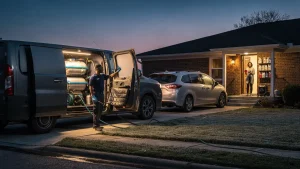
Call or text 828-333-0535 for an assessment anywhere in Spartanburg, Greenville, Greer, or the surrounding Upstate. We come to you.